Your training routine must evolve as energy systems change with age.
When I first started coaching athletes at different stages of life, I noticed a pattern: what worked at twenty rarely works at forty and that's completely normal. Elite sprinters, swimmers and athletes who train with jumping rope understand this better than anyone. They know that adaptation is the name of the game. Your body responds differently as the years accumulate and trying to replicate the exact routines from your college days will only lead to frustration and potential injury. The key is accepting that your training needs evolve alongside your changing fitness.
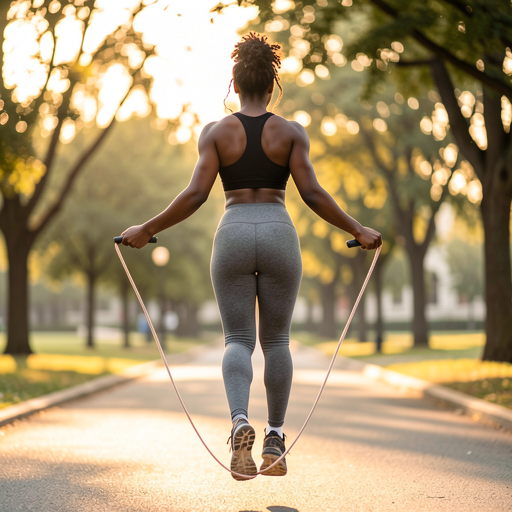
The triceps, shoulders and core all play crucial roles in proper form, whether you're throwing punches in the ring or working on technique to jump rope efficiently. These stabilizing muscles collaborate during every movement and as we age, maintaining them becomes even more critical. A lot of runners believe that adding short sprints to their distance routine will automatically make them faster overall. That's only partially true. While it does improve your sprinting ability for those final bursts, it won't necessarily improve your distance times.
👽
The reason is simple: our muscles develop and shift throughout our lives, which means certain training approaches that served you perfectly at twenty may do very little for you at forty or beyond. Your energy systems change as well and understanding this shift can completely transform how you approach training. If you're running, cycling or doing any high-intensity work, your body draws on different energy sources than it did in your twenties. Dr. Mark Verstegen, a sports medicine expert, has pointed out that maintaining high intensity becomes a different challenge entirely when those energy sources simply can't sustain the same level of output.
⚓
This is where skipping becomes such a versatile tool in your arsenal. It provides a high-intensity cardiovascular workout that's easier on the joints while still challenging your energy systems in meaningful ways. You get the benefit without pounding your knees and hips into the ground. So what's the practical takeaway? Keep changing the type of activity, the speed, the duration and the intensity of what you do.
🥋
If you've been consistent with physical activity over the years, your muscles are stronger than you think and they can absolutely support new training demands. But you have to listen to your body and respect its changing nature. Every athlete develops differently and the age range for peak performance can vary anywhere from five to twenty years between individuals. Rather than fighting the process of muscle change, work with it. Find exercises that challenge you while keeping you healthy and build a routine that you can sustain for the long haul, not just through a single season.